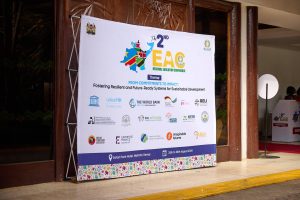


Trailblazers Mentoring Foundation (TMF) participated in the inaugural East African Education Conference, held in Arusha, Tanzania, from August 12th -15th , 2024. The event, themed Educate an African Fit for the 21st Century: Collective Action for Quality, Inclusive, and Life-long Learning in East Africa, brought together education stakeholders from across the region. The conference aimed to accelerate improved educational outcomes, aligning with the African Union’s 2024 Year of Education initiative, which emphasizes education as a driver of Africa’s social and economic transformation.
Co-organized by the East African Community (EAC) and partners like the Regional Education Learning Initiative (RELI-Africa), People’s Action for Learning (PAL) Network, the African Curriculum Association (ACA), and the Association for the Development of Education in Africa (ADEA), the conference focused on solutions to current educational challenges. It emphasized the need for collective action among governments, civil society, and development partners to foster quality, inclusive, and life-long learning in the region.
TMF’s presentation was part of the sub-theme Children Furthest Behind, which aimed to demystify the perceptions of children excluded from formal education. The sub-theme explored limited data on educational exclusion, gaps in legislative frameworks, and innovations that could effectively reach children who are often left behind in the EAC region. TMF’s presentation sought to redefine how marginalized children are perceived and addressed, offering practical solutions for their inclusion in educational systems

TMF showcased its approah Peer-to-Peer Driven Actions to Promote Re-entry of Pregnant Girls and Child Mothers to Formal Education and Other Alternative Skilling Pathways, an initiative implemented in Uganda’s Karamoja Sub-region. The program provides peer mentorship to support pregnant girls and young mothers in returning to formal schooling or pursuing alternative skills training pathways. By empowering these girls to continue their education, TMF seeks to break down barriers and transform societal perceptions of their potential.

During the conference, stakeholders acknowledged the need for more comprehensive data on educational exclusion and stressed the importance of addressing systemic barriers through legislation. TMF’s peer-to-peer model, which has seen success in Karamoja, was highlighted as an innovative and scalable solution that could be replicated across the region to ensure vulnerable children, including pregnant girls and child mothers, are not left behind.
The East African Education Conference, with its broad participation from policymakers, educators, researchers, and civil society organizations, provided a platform to share such innovations and commit to concrete actions aimed at achieving quality education for all children in the region. TMF’s contribution to the discussions reaffirmed the importance of multi-sectoral approaches to ensuring that children furthest behind have access to education and the skills needed to thrive in the 21st century.
By actively engaging in these dialogues, TMF continues to advocate for inclusive education and remains committed to promoting sustainable educational outcomes for marginalized children in Uganda and the East African Community.